When a crate helps
Dogs like a covered, quiet spot of their own. A crate can be that spot, and it helps in a few clear cases:
- Puppies: a safe place to sleep at night and to rest during the day, which helps with house training.
- Travel and holidays: a dog that knows its crate settles faster in a new place.
- After an operation: when the vet asks for rest, a known crate makes it easier.
- Busy homes: with children or visitors, the dog has a place where nobody disturbs it.
When it does not
A crate is the wrong tool when it is used as a punishment, when the dog spends most of the day in it, or when the dog panics inside. A dog with separation anxiety is not helped by a closed door. Ask a trainer or your vet first.
How to use a crate kindly
Make it big enough to stand, turn and lie flat. Put it where the family is, not in a cold hall. Let the dog explore it with the door open, with a cushion and a chew inside. Close the door only for short periods at first and never as a punishment.
Why a den in furniture works
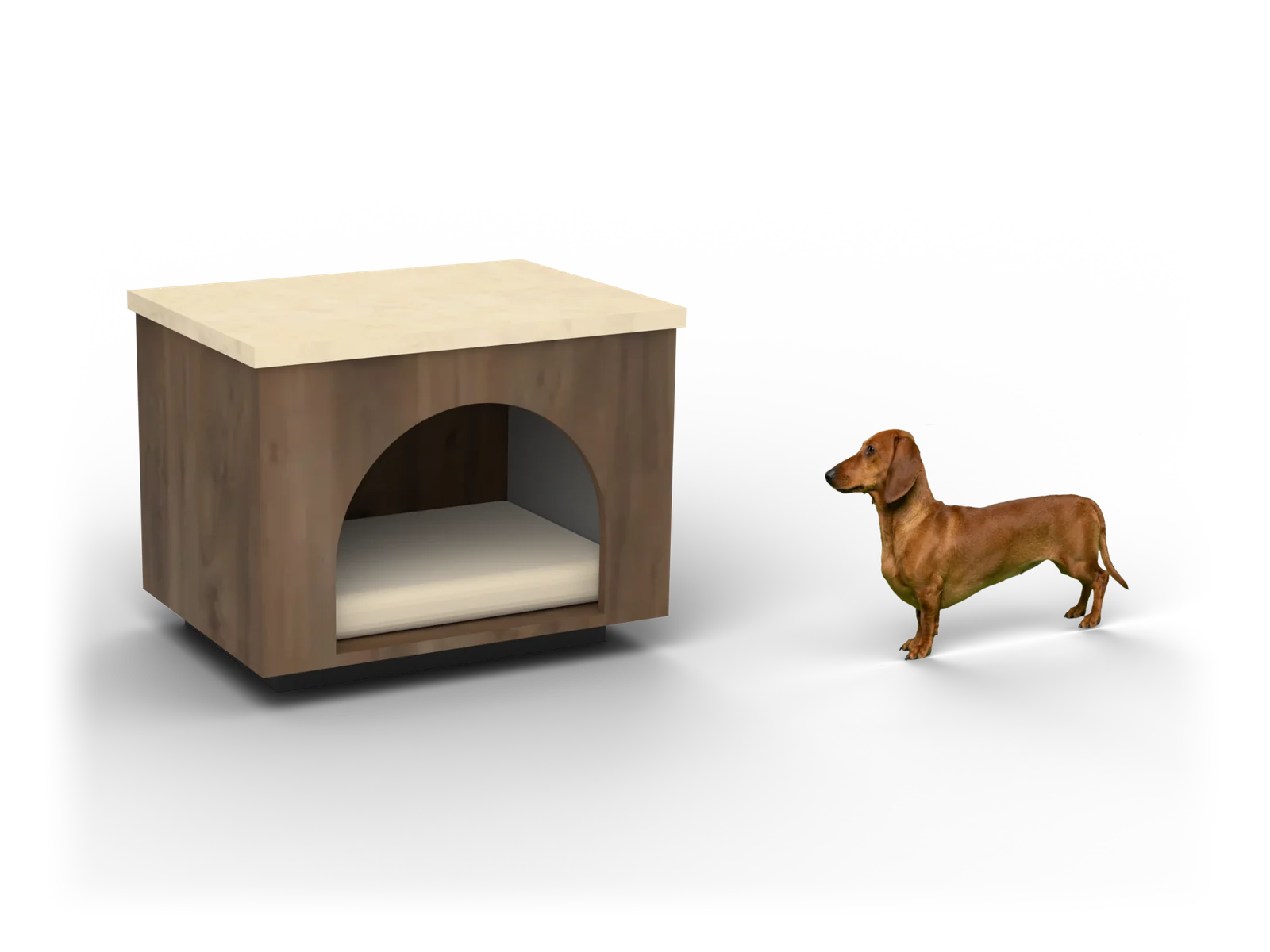
Many people keep the crate but dislike how it looks, so it ends up in a corner where the dog does not want to be. A den built into a side table, a sideboard or a TV unit stays in the living room, where the dog wants to be. The door can stay open, so it is a bed first and a crate only when needed.
Checklist
- Use the crate as a resting place, not a punishment.
- Size it so the dog can stand, turn and lie flat.
- Place it where the family spends time.
- Leave the door open most of the time.
- Ask a trainer or vet if your dog panics inside.