What works well
Flat-pack furniture is cheap, quick to buy and easy to cut. A few hacks are popular for good reasons:
- A cube shelf on its side, with one compartment open as a den for a small dog or a cat.
- A sideboard with the shelves taken out and a cat door cut into the side for the litter tray.
- A bench or shoe cabinet with a cushion inside for a small dog in the hall.
Where it falls short
Standard furniture comes in standard sizes. A cube shelf compartment is about 33 x 33 cm inside, enough for a cat but not for most dogs. Sideboards are mostly 40 to 45 cm deep and low inside, too tight for a medium dog to turn and lie down. A litter tray for a big cat often does not fit at all.
Air is the second problem. A closed cabinet needs slots high at the back and low at the base, or it gets warm and smells. Cut-outs in thin back panels and hollow doors weaken the piece, and a dog that pushes against it or chews the edge finds the weak spots fast.
When made to measure is the better buy
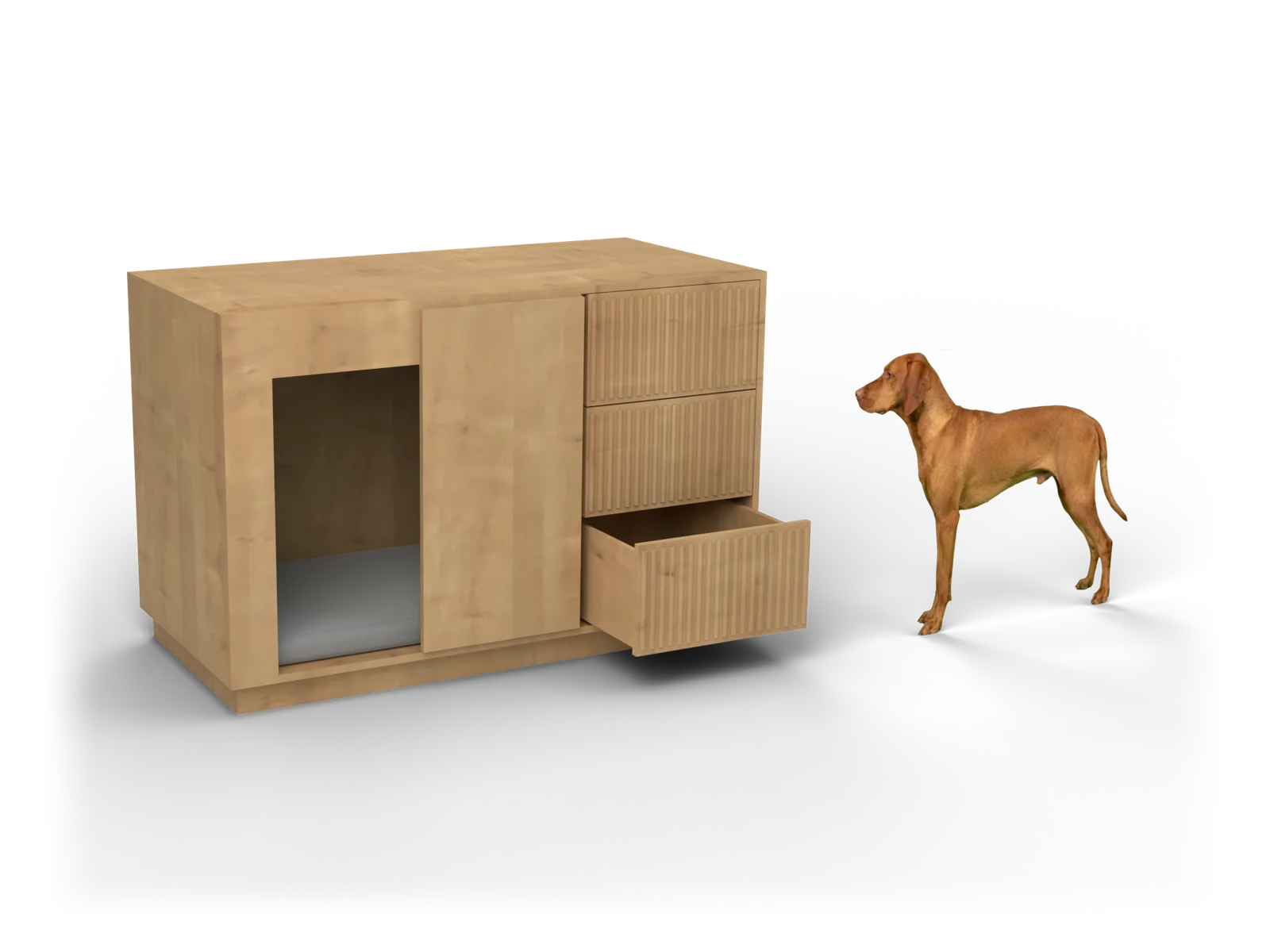
If your dog is medium or large, if the piece has to fit a niche or a wall to the centimetre, or if it should match your kitchen or your bedroom, building it to measure saves the guesswork. The den is sized from your dog, the air slots and opening are part of the drawing, and every edge your dog can reach is banded and rounded.
Checklist
- Measure your dog lying stretched out and standing.
- Check the inside depth of the cabinet, not the outside.
- Plan air slots high at the back and low at the base.
- Keep the opening wide and the edges rounded.
- For medium and large dogs, compare with a piece made to measure.